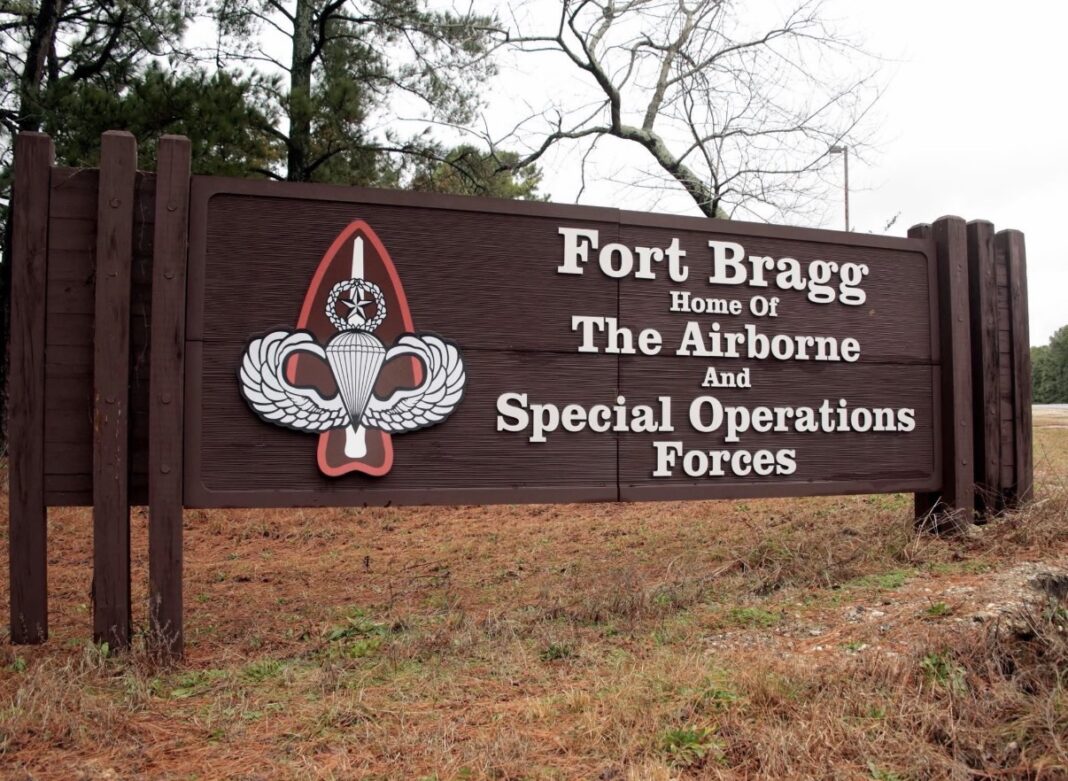
A new state veterans home near Fort Bragg is moving closer to reality after President Donald Trump signed bipartisan legislation Friday, Nov. 20, authorizing the transfer of approximately 20 acres of federal land to North Carolina for the project.
The legislation, introduced by U.S. Reps. Richard Hudson and Brad Knott, allows the U.S. Army to transfer property in Harnett County to the state at no purchase cost. The land would be used to construct a new long-term care facility for military veterans, replacing services lost when the Fayetteville State Veterans Home closed in 2024.
The project is being advanced through a combination of state funding and federal legislation, with support from Gov. Josh Stein, the North Carolina General Assembly, the North Carolina Department of Military and Veterans Affairs and members of the state’s congressional delegation.
North Carolina has authorized $40 million to support development of the facility through its state budget, which Stein signed into law in July.
According to an October solicitation issued by the North Carolina Department of Military and Veterans Affairs, the proposed veterans home would contain approximately 150 beds in a 145,000-square-foot facility on a 20-acre site in the Overhills area near Fort Bragg.
The state’s project notice lists an estimated total budget of $116.9 million, with funding expected to come from state veterans home resources and federal funds. The proposal also includes evaluating the possibility of an adult day care facility.
The new home could serve eligible veterans throughout the Sandhills region, including those living in Moore County.
The former Fayetteville State Veterans Home closed in 2024 after significant structural problems and repair needs were identified. According to Hudson’s office, 85 veterans were displaced by the closure, including residents with dementia and other disabilities.
State officials subsequently worked toward establishing a replacement facility, with the Department of Military and Veterans Affairs pursuing plans for a new location near Fort Bragg.
In September, Stein welcomed congressional approval of the land transfer and emphasized the state’s responsibility to provide care for veterans.
“This new facility will give veterans a home with access to the care they need,” Stein said in a Sept. 30 statement.
Stein also thanked North Carolina’s congressional delegation for its leadership in securing the land transfer.
Hudson, a Republican representing North Carolina’s 9th Congressional District, introduced H.R. 10159 in August alongside Knott, a Republican representing the 13th District.
The legislation received bipartisan support from North Carolina’s congressional delegation and passed the U.S. House of Representatives on Sept. 14 and the Senate on Sept. 29 without opposition.
U.S. Sen. Ted Budd, a Republican, supported the legislation in the Senate and worked with the Senate Armed Services Committee to advance its passage.
“Our veterans kept their promise to serve, and we have a responsibility to keep our promise to them,” Hudson said in a statement following the bill’s signing.
Knott said the legislation would help expand access to long-term care for North Carolina veterans.
The federal law authorizes the Army to transfer the land, identified as Parcel 3B within the Fort Bragg Training Area, to the state. North Carolina would be responsible for costs associated with the property transfer.
The legislation also allows the federal government to reclaim the land if it is no longer used for purposes related to a state veterans home.
Although the state has authorized $40 million for the project, additional federal funding is expected to be part of the financing. The state’s published project budget is an estimate, and the final cost could change as planning and design progress.
The Department of Military and Veterans Affairs has already sought architectural and engineering services for the proposed facility, marking another step in the development process.
The federal legislation removes a significant hurdle by authorizing the land transfer, but additional work remains before construction can begin.
A construction start date and anticipated opening date have not been announced.
Once completed, the new facility would help restore long-term residential and nursing care services for veterans in the Fayetteville and Fort Bragg region following the closure of the previous state veterans home.

A Moore County native who has spent more than 20 years telling stories across North Carolina and beyond. He’s worked with CNN, WRAL, and CBS 17, and now serves as a Video Journalist for ABC11. Patrick has a passion for breaking news and has earned multiple awards for his coverage. He’s also a certified NWS SKYWARN Storm Spotter and was among the first news videographers in the state to become an FAA-certified drone pilot.
